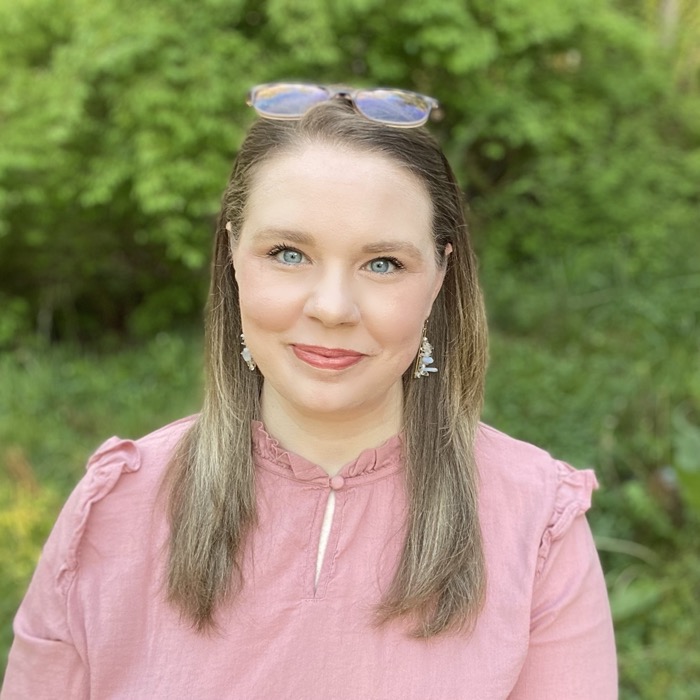
I Don't Just Hit the Ground Running. I Run Metaphorical Marathons.
I'm a senior product designer with six years in the field. For four of them I worked on a ground-up rebuild of an enterprise talent platform, where I owned about half of the new app's features and worked every week with PMs, engineers, and executives.
How I work now: prototypes are my main way of communicating design. I build a clickable prototype on a copy of the real app, so PMs and engineers see how a feature actually behaves, and I add walkthroughs that call out what changed from the original data. Figma is the support layer, for specific UI that needs careful arrangement and quick documentation, and some days it's still the faster tool. I guide AI closely from the first prompt. I ask for several options instead of one, then push back on each: does it match how our other features behave, reuse our front-end components and tokens, and solve the user's real flow in a way that fits the business case? I keep adjusting my AI process and its outputs to what dev and QA need, so what I hand off is something they can build and test. Usage data and business cases shape what's worth designing at all. For almost two years I've also done AI training and evaluation work as a contractor, which sharpens how I prompt and check.
Before design, I was a qualitative project director at a global market research company, Radius, managing $2 million in projects for household B2C and B2B brands and working directly with executives. I was part of more than 2,000 hours of web-based qualitative research, mostly one-on-one interviews, and I brought that into how I trained product teams to run discovery over the last couple of years. That means I've written bids, managed budgets, and walked into rooms where the question was, "So what do we do about this?" It still shapes how I design.
Before that, I taught for 13 years, earned two master's degrees in education, led a department of five teachers, and presented at conferences. Teaching is why I'm good at workshops, why I explain design decisions so people actually follow them, and why I did not do a bootcamp. They couldn't go deep enough, so I found mentors and built my own education instead.
Outside of work: my husband and teenage sons, ice skating, yoga, poetry, painting abstract watercolors, and speaking several languages. I like to dive deep into everything. Mostly, though, I'm someone who spots patterns and likes finding the deceptively simple fix.
Clifton Strengths
One of the most powerful tools I've used over the past several years is Clifton Strengths, based on the work of Dr. Don Clifton. His research showed that the effect of improving your strengths is much greater than focusing on your weaknesses, and that perceived weaknesses are often just the pitfalls of your strengths.
Here are my top five strengths, each as Gallup describes it. The colors represent the four categories of strengths. Having all four categories in your top five is somewhat rare.
- Executing
- Influencing
- Relationship Building
- Strategic Thinking
- Activator"People who are especially talented in the Activator theme can make things happen by turning thoughts into action."
- Input"People who are especially talented in the Input theme have a craving to know more. Often they like to collect and archive all kinds of information."
- Strategic"People who are especially talented in the Strategic theme create alternative ways to proceed. Faced with any given scenario, they can quickly spot the relevant patterns and issues."
- Restorative"People who are especially talented in the Restorative theme are adept at dealing with problems. They are good at figuring out what is wrong and resolving it."
- Individualization"People who are especially talented in the Individualization theme are intrigued with the unique qualities of each person. They have a gift for figuring out how people who are different can work together productively."
As a leader, I want to bring this way of thinking to my team to support their personal and professional growth, because a team is stronger when each person is empowered to reach their potential. Learn more about Clifton Strengths.
Recommendations
Simply put, Amanda Howard is an excellent and stellar all-around UX and product design professional.
I'm grateful to have had the pleasure of working with Amanda during my time at Thrive TRM. She has a great personality and a go-getter mindset, which sets her apart from the crowd. Her understanding of the user experience design process and, in particular, her user research skills and workshop facilitation skills are top-tier.
Abdalla Emam, Former Director of Product DesignRead the Full Recommendation
She has an impressive passion for diving deep into understanding who the users are and what they need so that she can turn complex problems into elegant and user-centric-driven designs.
It's always a pleasure to ideate, collaborate, and partner with Amanda on design projects. Her great way of articulating her UX knowledge put the team and the users at ease, whether in team meetings, user interviews, whiteboarding sessions, or design reviews with executives.
Even more impressive is witnessing Amanda Howard's growth and eagerness to learn and adapt. I'm so proud of her growth and proud to have learned from her the appreciation and the importance of understanding neurodivergence challenges and superpowers. Her passion for designing for accessibility has always been an inspiration to me.
I'm sure that Amanda will be successful anywhere she desires to work, and anywhere her UX superpowers are unleashed! I won't hesitate to work with her again in the future, and I highly recommend Amanda for any UX opportunities.

In just a few weeks of Amanda joining the team, she's been really fantastic to work with! I love how she uses our various softwares including Figma, JIRA and HotJar to make our workflow more efficient and capture the true user experience of the neurodiverse user group. I'm so glad Amanda has also taken proactive initiative to collaborate with other teams of passionate disability advocates across the organization (Software Engineers, UX Researchers and Data Scientists) to make sure the whole experience of finding a job is seamless and intuitive for neurodiverse job seekers. Thank you for all your awesome creativity and collaboration, Amanda!
Jhillika Kumar, Founder of Mentra

I would recommend Amanda without reservation. In my 20 years hiring and managing UX teams, rarely have I encountered someone with as much drive and who is so proactive in her learning as Amanda. She is a self-starter who will drive toward results all while being strongly rooted in the team.
Christina York, CEO at SpellBound